@midjourney #SWTech #SocialWorkAiArt

No comments on Happy International Women’s Day!
@midjourney #SWTech #SocialWorkAiArt
Employment is Essential for Individuals with Severe Mental Illness
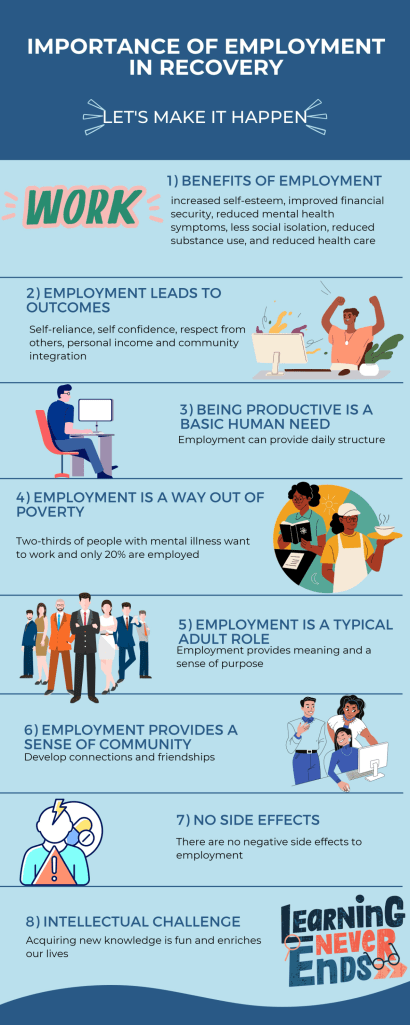
Employment rates among individuals with severe mental illness (SMI) are less than 20% despite an often-high desire to obtain some form of employment or place in society (Suijkerbuijk et al., 2017). It is well known that work contributes to an enhanced quality of life, decreased poverty, decreased psychiatric symptoms and inpatient hospital visits, increased self-esteem, and self-worth, improved social skills, and reduced stigma (Suijkerbuijk et al., 2017). The research is relatively straightforward, Individual Placement and Support (IPS) is an effective intervention for increasing employment rates among people with SMI. Two systematic reviews corroborated this result (Suijkerbuijk et al., 2017; Crowther et al., 2010). In comparison, IPS has been demonstrated to be a superior model to pre-vocational training, modified vocational rehab (Crowther et al., 2010), and the Diversified Placement Approach (DPA) to employment and treatment as usual, defined as psychiatric medication management. (Kukla et al., 2009). In addition, IPS has been demonstrated to double participant access to work opportunities and success (Koletsi et al., 2009).
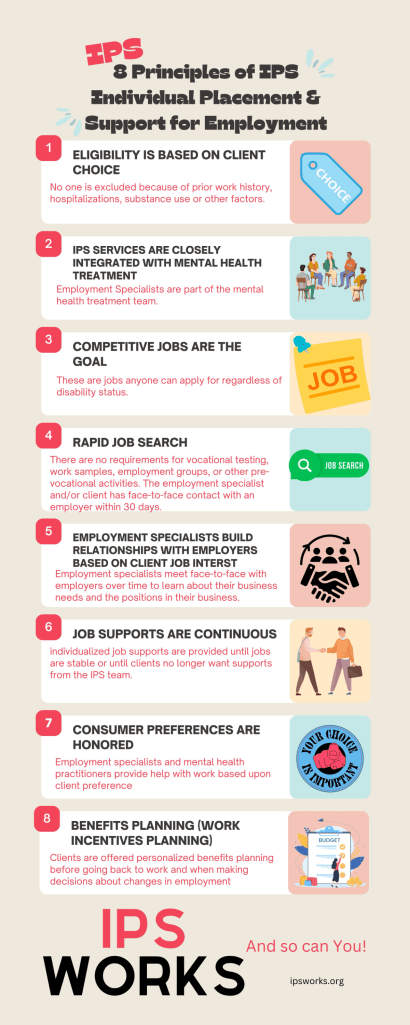
The following infographics have been created to explore the importance of employment and implementation of the EBP Individual Placement and Support (IPS).

References:
Crowther, R., Marshall, M., Bond, G. R., & Huxley, P. (2010). Vocational rehabilitation for people with severe mental illness [Systematic Review]. Cochrane Database of Systematic Reviews 2010.
Koletsi, M., Niersman, A., van Busschbach, J. T., Catty, J., Becker, T., Burns, et al., (2009). Working with mental health problems: Clients’ experiences of IPS, vocational rehabilitation and employment. Social Psychiatry and Psychiatric Epidemiology, 44(11), 961–970. https://doi.org/10.1007/s00127-009-0017-5
Kukla, M., & Bond, G. R. (2009). The working alliance and employment outcomes for people with severe mental illness enrolled in vocational programs. Rehabilitation Psychology, 54(2), 157–163. https://doi.org/10.1037/a0015596
Suijkerbuijk, Y, B, Schaafsma, F, G, van Mechelen, J, C, Ojajarvi, A, Corbiere, M & Anema, J. R. (2017). Interventions for obtaining and maintaining employment in adults with severe mental illness, a network meta-analysis. Cochrane Database of Systematic Reviews, (9).

With all of the social media sites out there, which one do I pick to build my PCN??
“Social Media Sites” @wonderai
“Picking a Social Media Tool” @midjourney
CHOOSE THE TOOL TO FIND YOUR PEOPLE!

Find the perfect online communities where you can connect with like-minded individuals who share your interests and passions. Discover the ideal platforms tailored to your needs and start building meaningful connections today!
I chose LinkedIn and X


“Social Workers in Professional Collaboration Networks” @wonderai
#SocialWorkAiArt Project
A collective of professionals uniting to explore social work themes through artistic expression and dialogue.
Collaborators on X

Professional collaboration networks (PCN) are platforms or communities designed for individuals within social work to connect, share knowledge, and collaborate on various projects or initiatives. These networks facilitate communication among professionals, allowing them to exchange ideas, seek advice, and form partnerships.
They can take various forms, such as online platforms, forums, industry-specific groups, or even events where professionals gather to discuss trends, challenges, and innovations within their field. The primary goal is to foster collaboration, encourage knowledge sharing, and create opportunities for professional development and growth.
These networks often offer:
They serve as valuable hubs for Social Workers to expand their network, stay updated on industry trends, and collaborate on endeavors that can further their careers or contribute to their field’s advancement.
An example of a PCN project #SocialWorkAiArt found on X.
Using AI art generators to discuss social work can offer a unique perspective and facilitate conversations on various aspects of the field.
#SocialWorkAiArt
“Social Workers are Superheros”
@midjourney

By incorporating AI art generators into discussions about social work, practitioners, activists, and advocates can leverage these tools to spark meaningful conversations, raise awareness, and promote positive change within society.

#SocialworkAiArt
Social Workers Fight for Social Justice @nightcafe
#SocialWorkAiArt
“Social Work Fuels the Soul” @nightcafe


#SocialWorkAiArt
Social Workers “Have Love for Their Community” @wonderai

In the midst of chaos and turmoil, social workers emerge as beacons of hope, working diligently to bring peace to our troubled world. With unwavering dedication, they strive to make a positive difference in the lives of individuals, families, and communities.
These unsung heroes possess a unique ability to empathize with those facing adversity. Through their compassion and unwavering support, social workers provide a sense of solace and understanding to those desperately in need. They lend an empathetic ear and offer guidance during times of personal struggle, gently encouraging individuals to navigate life’s challenges.
Social workers play a vital role in building bridges, fostering dialogue, and creating harmony in society. By promoting social justice and advocating for marginalized populations, they address the root causes of inequality and discrimination. With their tireless efforts, they strive to dismantle barriers and create a world where fairness and equality prevail.
Beyond their individual impact, social workers also contribute to broader systemic change. Through research, policy analysis, and community engagement, they identify areas of improvement and work tirelessly to reform institutions. By bringing together diverse stakeholders and facilitating partnerships, they promote collaboration and inclusivity, paving the way for a more peaceful and equitable world.
In a world often numbed by indifference, social workers remind us of the power of compassion, unity, and understanding. They embody the belief that every person deserves respect and dignity, regardless of their circumstances. By dedicating their lives to uplifting others, they inspire hope and remind us all of the innate goodness within humanity.
So let us celebrate the invaluable contributions of social workers around the world. Their unwavering commitment to peace and social justice demonstrates that through compassion and collective action, we can create a world that is not only kinder and more equitable but also profoundly peaceful.
“The true meaning of life is to plant trees, under whose shade you do not expect to sit.” – Nelson Henderson

“Social Workers Bring Peace to The World”
@midjourney (image) @Wordpress Ai Assistant (text)
This is the heart of the Professional Collaboration Network coming together to move the social work field forward.

Psychiatric rehabilitation constitutes an integrated strategy to aid individuals with mental health conditions in achieving recovery and elevating their life quality. Its focus lies in cultivating skills, coping mechanisms, and social integration to empower individuals towards leading fulfilling and productive lives. The integration of virtual reality (VR) technology into psychiatric rehabilitation has introduced innovative and effective staff training methods, particularly beneficial for newcomers or those lacking formal psychiatric rehabilitation training. As mental health understanding and rehabilitation practices evolve, so must the tools and methods utilized to educate professionals in this field. VR has proven efficacy in treating clients with Schizophrenia, as demonstrated in this compilation. It emerges as a promising solution, offering immersive, interactive, and adaptable training experiences that prepare both clients and staff to develop the requisite skills for recovery within the complex and ever-evolving realities of mental health care.
This compilation aims to furnish a comprehensive resource for those exploring the applications of virtual reality in training staff for psychiatric rehabilitation. The selection of scholarly research delves into the multifaceted facets of employing VR technology to enhance staff competencies in skills, empathy, and resilience. The resources compiled here provide insights, best practices, and empirical evidence illustrating the potential of virtual reality to advance staff training within psychiatric rehabilitation. Embracing the evolving technology of VR, professionals in this field can augment empathy and elevate the quality of care and support for individuals grappling with severe mental health conditions, thereby contributing to enhanced health outcomes.
Adery, L. H., Ichinose, M., Torregrossa, L. J., Wade, J., Nichols, H., Bekele, E., Bian, D., Gizdic, A., Granholm, E., Sarkar, N., & Park, S. (2018). The acceptability and feasibility of a novel virtual reality based social skills training game for Schizophrenia: Preliminary findings. Psychiatry Research, 270, 496–502. https://doi.org/10.1016/j.psychres.2018.10.014
The present study is an initial report of the feasibility and acceptability of a 10-session virtual reality (VR) social skills training ‘game,’ Multimodal Adaptive Social Intervention in Virtual Reality (MASI-VR), for eighteen individuals with Schizophrenia in an outpatient program in Tennessee. MASI-VR targets social attention in individuals with Schizophrenia. Impaired social functioning is a fundamental characteristic of Schizophrenia and represents a significant obstacle to individuals achieving recovery. Pharmacology alone cannot enhance social impairments, and current interventions for social skills often encounter issues related to scarcity, excessive demands, and poor compliance. In the interactive MASI-VR experience, the primary emphasis is on enhancing individuals’ conversational skills in common community settings like stores, bus stops, and cafeterias. Participants engage with various characters to practice gathering personal information through conversation. VR offers essential simulation and adaptable practice for mastering new skills in multiple settings. The use of MASI-VR can allow more engagement and personalized care and is a complement to traditional psychiatric rehabilitation techniques. It is a training method for staff to increase competencies for providing psychiatric rehabilitation interventions.
This research was conducted by authors that are affiliated with well-known academic institutions. They were using rigorous scientific methods. The authors represent various disciplines: psychology, engineering, computer science, and psychiatry. The study aimed to determine the acceptability and feasibility of the MASI-VR and found that the eighteen participants completed an average of 8.5 out of 10 sessions, indicating high compliance with the intervention. Participants also reported elevated levels of satisfaction with the intervention, with 94% reporting that they enjoyed the game and 89% saying that they found it helpful. Increased compliance and overall satisfaction were demonstrated for MASI-VR. These figures indicate that this study has internal validity; however, it is uncertain if the results can be generalizable to other demographics. The authors specifically focus on MASI-VR with individuals with Schizophrenia and not on the use of training staff. However, it is essential to recognize that community-based research is a valuable tool for generating knowledge for social change and increasing staff responsiveness to the needs of the individuals in their recovery. Further research will need to be completed for MASI-VR as there was no control group in this study.
Bisso, E., Signorelli, M. S., Milazzo, M., Maglia, M., Polosa, R., Aguglia, E., & Caponnetto, P. (2020). Immersive virtual reality applications in schizophrenia spectrum therapy: A systematic review. International Journal of Environmental Research and Public Health, 17(17). https://doi.org/10.3390/ijerph17176111
The authors conducted a systematic review of the literature from April 2019 to June 2020 to identify the therapeutic application of virtual reality for Schizophrenia spectrum disorders. Three types of interventions were used: VR training consisting of 3D-VR scenarios reproducing daily life and related challenges, VR Social Skills Training (VR-SST) focusing on interpersonal communication, VR Avatar therapy simulating a three-way conversation between therapist, patient, and a digital simulation (avatar) of one of the voices, VR Cognitive Behavioral Therapy, for the treatment of delusional disorders and paranoia, VR exposure, controlled exposure to a stimulus that causes anxiety and fear. VR can simulate social environments, evoking responses, and emotions comparable to those experienced in the actual world within a specific context. This capability elicits reactions like real-life situations when interacting with virtual people. The results of the review indicate that VR can be used for the assessment and treatment of psychotic disorders and allows effective and brief interventions without the use of medication and related side effects. VR is also highly customizable to the needs of the individual.
The authors identified a thorough search of research following the PRISMA guidelines. After all exclusions, six articles were included in the systematic review. There was one article by La Paglia et al. (2016) that was flagged for a high risk of bias in the randomization process. The authors clearly articulated a risk of bias assessment for all six articles reviewed. Other issues noted were the limited number of studies available for the use of VR for the treatment of psychosis in Schizophrenia, lack of diversity in the study samples, no short-term follow-up information included, and the heterogeneity of VR interventions, making generalizability difficult. Despite the identified limitations, the authors were able to substantiate the effectiveness of VR for the treatment of Schizophrenia. This review did not discuss the training efforts of staff. However, the authors identified that VR environments of the future need to become more interactive, plausible, and adherent to reality and must adapt and react to the client’s behavior. It is speculated that customization will change as the client moves further into recovery.
Cieślik, B., Mazurek, J., Rutkowski, S., Kiper, P., Turolla, A., & Szczepańska-Gieracha, J. (2020). Virtual reality in psychiatric disorders: A systematic review of reviews. Complementary therapies in medicine, 52, 102480. https://doi.org/10.1016/j.ctim.2020.102480
This systematic review explored virtual reality (VR) utilization in psychiatric disorders by examining PubMed and Web of Science databases through April 2020. The scope encompassed systematic reviews, meta-analyses, or reviews employing systematic search strategies. Highlighted was the prevalence of psychiatric conditions in the US, with 41% of adults receiving treatment for mental disorders. Moreover, in the European Union, government mental health services typically have fewer than two psychiatrists per 100,000 children and adolescents. The analysis involved seventy studies to ascertain whether VR could serve as a viable standalone tool or complement traditional treatments for psychiatric disorders. Given the scarcity of mental health professionals, the authors advocate for developing innovative treatments. They delineate four fundamental categories for creating either a wholly or partially virtual world: Reality, representing the actual world; Augmented Reality, integrating computer-generated data into real-world images; Augmented Virtuality, merging real-life data into a computer-generated environment; Virtual Reality, where the entire world is computer-generated. In the areas of pain perception, the authors noted that VR can be used instead of traditional medication for anxiety/phobia; VR can be used as an adjunctive therapy, not as a replacement, and can serve as an intervention for individuals who are resistant to conventional treatments. Since many individuals with severe mental illness, such as Schizophrenia and psychosis, do not respond to traditional therapies, staff needs to consider VR as an engagement tool.
The authors identified that their review encompassed research that did not exclusively employ a singular type of virtual reality. Among the reviewed articles, twenty-five referenced using head-mounted displays as the VR tool, while seventeen specifically highlighted the use of VR games. Other studies referred to VR tools without specifying the exact type, using terms such as immersive VR, non-immersive VR, VR exposure therapy, or VR tasks. This lack of standardized terminology might pose a potential barrier to the generalizability of the findings. The authors were transparent about a noticeable limitation related to the tool employed to assess the quality of reviews. They acknowledged that the AMSTAR tool, primarily designed for systematic reviews of RCTs (Randomized Controlled Trials), might not comprehensively reflect the quality of this review’s broad range of research. The authors contend that the success of VR also depends on the specific psychiatric disorder and suggest that further studies delineate different diagnoses and the potential side effects using a standardized tool. This study supports the use of VR for individuals with Schizophrenia and psychotic disorders, as preliminary data suggests VR enhances motivation and adherence to treatment. It is beneficial for staff to incorporate VR as a therapeutic tool as the intervention has a positive impact on health outcomes.
Gillespie, G. L., Farra, S., Regan, S. L., & Brammer, S. V. (2021). Impact of immersive virtual reality simulations for changing knowledge, attitudes, and behaviors. Nurse Education Today, 105, 105025. https://doi.org/10.1016/j.nedt.2021.105025
This qualitative research describes the planned changes in knowledge, attitudes, and behaviors of healthcare providers for the future care of persons with challenges to the social determinant of health (SDH). Individuals with severe mental illness face numerous challenges to SDH that include economic instability, lack of healthcare access, lack of adequate education, and lack of social support. The immersive VR simulation in this study utilized patients from different cultural and socioeconomic backgrounds who presented to the healthcare office with very complex needs. This research’s qualitative results identified four themes related to SDH and healthcare workers: the acknowledgment of SDH, an improved provider experience for patients, viewing a patient as a person with complex needs, and improved learning within the affective domain of empathy. It was noted that the providers in this study had extensive years of experience in healthcare, but this does not necessarily equate to empathy or the ability to consider SDH. The VR environment allows workers to understand the barriers that get in the way of attending appointments and appropriate follow-up. Healthcare workers need to develop empathy and understanding of individuals with severe mental illness and the knowledge of how SDH impacts compliance and outcomes. Increased empathy, skills, and knowledge can be achieved using VR simulations as a staff training tool.
The study involved 206 healthcare workers from various hospital and outpatient settings across Ohio, representing multiple disciplines. Of these, 187 participants completed the entire questionnaire. The research employed investigator triangulation, where various researchers participate in the same study, providing varied observations and conclusions to enhance result reliability. Although the sample’s diversity was not specified, the VR simulations involved diverse clients with complex psychosocial factors, contributing to result validity. This approach allowed subjects to practice in realistic contexts, yielding more authentic outcomes. Frequently, individuals seeking mental health treatment face notable obstacles related to SDH. These challenges hinder their capacity to participate in and adhere to treatment actively. Psychiatric rehabilitation interventions aim to diminish the influence of SDH on individuals, thus enhancing their health outcomes. Personnel must nurture empathy, comprehend SDH, and improve client experiences for effective psychiatric rehabilitation by grasping their intricate needs. Logically, improving these skills among staff members naturally leads to heightened client engagement. Enhanced staff training using VR simulations can increase engagement and improve health outcomes.
Plechatá, A., Hejtmánek, L., & Fajnerová, I. (2021). Virtual Supermarket Shopping Task for Cognitive Rehabilitation and Assessment of Psychiatric Patients: Validation in Chronic Schizophrenia: Úloha nákupu ve virtuálním supermarketu pro kognitivní reha – bilitaci a vyšetření psychiatrických pacientů: Validace u pacientů s chronickou schizofrenií. Ceskoslovenska Psychologie, 65(1), 14–30. https://doi.org/10.51561/cspsych.65.1.14
The quantitative study design involved comparing the performance of individuals with Schizophrenia and healthy control subjects on the Virtual Supermarket Shopping Task (VSST). The sample consisted of twenty individuals with Schizophrenia and twenty healthy control subjects. Results showed individuals with Schizophrenia performed significantly worse than the healthy control subjects on the VSST, indicating deficits in cognitive abilities, attention, memory, and executive function. Cognitive deficits and negative symptoms of Schizophrenia have a direct impact on Activities of Daily Living (ADLs). These deficits can significantly impact sustained recovery. The VSST is a simulation of a shopping activity at a local store. There are 2 phases: the acquisition phase (the participant is moved to the virtual supermarket lobby and asked to remember a series of items from a shopping list) and the recall phase (the participant walks around the virtual market and collects items). This simulation has no time limit, and results can be processed for the next series. The VSST was deemed reliable and valid for assessing cognitive abilities in Schizophrenia and can be used for cognitive rehabilitation and assessment. The study suggests that the VSST has the potential to be a valuable tool for improving the everyday functioning of individuals with Schizophrenia.
Supporting the rehabilitative aspect of the task, the researchers propose that conducting repeated assessments and engaging in long-term research is crucial to substantiate its impact on patients’ cognitive abilities and its benefits for their overall well-being. However, it is essential to note that the study lacks causal arguments as it does not delve into the direct cause-and-effect relationship between the VSST and cognitive enhancement in individuals with Schizophrenia. Instead, the study centers on examining the correlation between VSST performance and cognitive abilities for individuals with Schizophrenia and healthy control subjects. Therefore, while the study offers valuable insights into the potential of the VSST as a beneficial tool for enhancing the cognitive abilities and daily functioning of individuals with Schizophrenia, it falls short of establishing a causal link between the VSST and cognitive improvement.
Qiao, J., Xu, J., Li, L., & Ouyang, Y.-Q. (2021). The integration of immersive virtual reality simulation in interprofessional education: A scoping review. Nurse Education Today, 98, 104773–104773. https://doi.org/10.1016/j.nedt.2021.104773
This scoping review delved into the integration of immersive virtual reality simulation (IVRS)within interprofessional education (IPE). Examining 12 research articles, the study aimed to grasp the effectiveness of IVRS in IPE. Current curricula in health education programs provide restricted chances for students to foster teamwork and interprofessional collaboration skills. IVRS creates a virtual clinical setting, enabling students to collaborate and learn. Student experiences with IVRS primarily focused on heightened cooperation and communication spanning across their respective disciplines, thereby reducing treatment silos. IVRS is a significant training tool for novice and experienced healthcare providers, fostering heightened interprofessional collaboration. Cooperation is essential in managing severe mental illness, requiring coordination among various disciplines, including psychiatry, nursing, social work, psychology, psychiatric rehabilitation, employment specialists, and peers. Enhancing the expertise and abilities of staff is instrumental in promoting collaboration to alleviate the impacts of Social Determinants of Health (SDH) and mental health symptoms, thereby enhancing treatment outcomes. An approach involving a team results in a more precise understanding of the individual and the development of a comprehensive treatment plan.
The scoping review analyzed a limited set of research articles (12) examining the effectiveness of immersive virtual reality simulation (IVRS) in interprofessional education (IPE), potentially limiting the comprehensive coverage of available literature on this subject. The literature search was confined to specific databases (CINAHL, EMBASE, ERIC, MEDLINE PubMed, ProQuest, PsycINFO, Scopus, Science Direct, Cochrane Library, and Open Grey), potentially excluding pertinent studies from alternative sources. The insights from students involved in IVRS were derived solely from the findings of the included research articles, possibly not encapsulating the viewpoints of all students or disciplines engaged in IPE. The scoping review didn’t furnish details regarding the quality or methodological rigor of the incorporated research articles, potentially impacting the conclusions’ reliability. Many studies were conducted in North America, one in Australia and two in Singapore. Although this encompasses various cultures, it could notably limit the generalizability of the findings. This study did not include a control group, which could impact the validity of the results.
Riches, S., Khan, F., Kwieder, S., & Fisher, H. L. (2019). Impact of an auditory hallucinations simulation on trainee and newly qualified clinical psychologists: A mixed-methods cross-sectional study. Clinical psychology & psychotherapy, 26(3), 277–290. https://doi.org/10.1002/cpp.2349
This study employed a mixed methods approach to pilot and assess a newly developed immersive simulation of auditory hallucinations. It aimed to gauge its efficacy as a training tool for clinical psychologists. The research comprised two distinct phases. In Phase 1, trainee and newly qualified clinical psychologists participated in an immersive art exhibit in London featuring an auditory hallucination simulation. Phase 2 involved conducting semi-structured interviews with post-exhibition queries immediately after the experience and during a follow-up six months later. The results demonstrated a notable improvement in subjective understanding, heightened compassion, increased comfort in communicating with individuals experiencing auditory hallucinations, and greater confidence in their clinical practice among the psychologists involved. By providing a firsthand experience, this technology can bridge gaps in comprehension, offering a more empathetic and informed perspective on what individuals experiencing psychotic episodes might undergo. As staff members gain a deeper understanding through these simulations, it can foster greater empathy, reduce misconceptions, and diminish the stigma surrounding mental health conditions.
Although the article presents favorable results, it exclusively centers on clinical psychologists. The immersive intervention did not utilize virtual technology. As participants navigated the exhibit, a prerecorded audio guide conveyed information about the artwork through headphones. Live professional actors repeatedly overlaid the audio with simulated ‘voices.’ Each participant was allocated a distinct audio guide, and the actors personalized the ‘voices’ to match individual participants, observed through gallery cameras in a nearby production area. The study’s constraints encompassed a limited sample size and the lack of a control group. The ‘Voices’ utilized were individualized rather than standardized, potentially impacting the study’s validity and applicability. The study holds significance due to its personalized experiential approach. Psychiatric rehabilitation interventions are similarly tailored to match the unique experiences of recipients. As clinicians cultivate heightened empathy and a deeper comprehension of clients’ experiences, they can customize interventions to concentrate on acquiring the necessary skills and strategies for successful community integration and improvement of SDH.
Riches, S., Pisani, S., Bird, L., Rus-Calafell, M., Garety, P., & Valmaggia, L. (2021). Virtual reality-based assessment and treatment of social functioning impairments in psychosis: A systematic review. International Review of Psychiatry, 33(3), 337–362. https://doi.org/10.1080/09540261.2021.1918648
The authors of this review highlighted social functioning impairment as a crucial aspect for individuals experiencing psychosis. This impairment contributes to poorer treatment outcomes, decreased engagement in daily activities, social isolation, and compromised social abilities. Social impairment directly impacts Social Determinants of Health (SDH). Virtual reality interventions in therapeutic settings offer an advantage by simulating a realistic environment that can elicit cognitive, behavioral, and emotional responses like real-life situations. These interventions used head-mounted displays (HDM) and immersive 2-D screens that replicated avatars in community settings, such as homes, café, bakeries, libraries, busses, and trains. The review encompassed 58 studies from 2005 to 2020, showcasing the use of VR within therapeutic environments and extending to community settings while maintaining safety for this vulnerable group. Utilizing VR interventions integrating psychiatric rehabilitation techniques enables individuals to undergo real-life experiences, resulting in improved social functioning and an overall enhancement in SDH. This research significantly affects clients by promoting the growth of skills and integration within the community. Regarding staff, it involves the capability to identify obstacles that impede clients’ navigation through diverse environments, leading to the creation of personalized treatment plans to tackle these challenges.
The “Quality Assessment Tool for Quantitative Studies,” developed by the Effective Public Health Practice Project (EPHPP), a tool for knowledge synthesis, was used in this study to assess research quality. Of the twenty-six studies using HMD as the virtual intervention, twenty-four were rated as ‘strong,’ and two were ‘moderate.’ Of the thirty-two 2-D screen studies, twenty-six were rated ‘strong,’ eight were ‘moderate,’ and one was ‘weak.’ It is important to note that in this research, virtual reality is defined as the use of HMD and 2D screens. This is an essential distinction, though both interventions collectively yielded positive results. The high-quality research in this study offers robust and ethical evidence that VR is plausible for assessing and treating social impairments. VR can be effectively used to complement traditional interventions used to treat Schizophrenia and other psychotic disorders. The results are transparent and auditable and can be utilized to guide agency policymaking and staff training.
Schroeder, A. H., Bogie, B. J. M., Rahman, T. T., Thérond, A., Matheson, H., & Guimond, S. (2022). Feasibility and efficacy of virtual reality interventions to improve psychosocial functioning in psychosis: Systematic review. JMIR Mental Health, 9(2), e28502. https://doi.org/10.2196/28502
This study is a comprehensive analysis of 18 peer-reviewed articles focused on implementing Virtual Reality (VR) in psychiatric rehabilitation (PR) interventions. The study involved participants diagnosed with psychotic disorders, and the interventions employed encompassed cognitive remediation, social skills training, and vocational skills training, as well as addressing auditory and verbal hallucinations and paranoia. The hypothesis posited that interventions within psychosocial rehabilitation (PSR) could amplify the practical application of acquired psychosocial skills in real-life scenarios, thereby contributing to enhanced long-term functioning. The results validated this hypothesis, indicating that VR-PR interventions effectively improve cognitive abilities, social skills, vocational skills, and overall quality of life for individuals with psychotic disorders. This discovery holds significance as it suggests that training staff to utilize VR-PR offers a practical means of applying learned skills to real-life situations. Given the impracticality of accompanying individuals in their daily routines, this technology enables staff to gain insights into how individuals with psychotic disorders navigate everyday life. This understanding facilitates the development of personalized plans tailored to provide the necessary skills and support for successful community integration. Staff members can cultivate empathy and a deeper understanding of the impact of psychiatric symptoms on daily functioning. The findings underscore the potential of VR-PR interventions as a valuable tool for staff training and enhancing the overall quality of care for individuals with psychotic disorders.
This research adhered to PRISMA guidelines and involved participants diagnosed with Schizophrenia, Schizoaffective Disorder, or other psychotic disorders. Eligibility criteria did not necessitate a control group. Two authors independently screened all included studies, and a resolution process for disagreements was established. Bias assessment employed two distinct tools, and each study underwent independent evaluation by two authors. A comprehensive summary of the included studies was provided, highlighting the brief identification of overall study quality. Feasibility results indicated dropout rates. The findings concluded that Virtual Reality (VR) interventions are feasible and efficacious, significantly enhancing planning, cognitive functioning, sustained attention, conversational skills, and executive functioning. Notably, the studies were limited by their small size, lack of a control group, English-language exclusivity, and considerable heterogeneity across various VR environments.
This study underscores a research gap and highlights the need for additional investigations comparing VR-based interventions to traditional psychosocial interventions, employing control groups to ascertain the optimal duration and number of sessions required for optimal efficacy.
Smith, M. J., Fleming, M. F., Wright, M. A., Jordan, N., Humm, L. B., Olsen, D., & Bell, M. D. (2015). Job offers among individuals with severe mental illness after virtual reality job interview training. Psychiatric Services (Washington, DC), 66(11), 1173–1179. https://doi.org/10.1176/appi.ps.201400504
Employment is pivotal in psychiatric rehabilitation, serving as a Social Determinant of Health (SDH) that enhances recovery and overall community assimilation. Individuals with Schizophrenia often face functional impairments affecting their vocational outcomes. Social challenges can hinder success in job interviews. Virtual Reality Job Interviewing Training (VR-JIT) offers a platform where individuals can engage in multiple virtual job interview scenarios with a simulated human resource representative, Molly Porter. This intervention can be personalized, progressing from easy to moderate to challenging levels based on individual performance. This real-life simulation can elevate the interview process, enabling individuals to build confidence and master skills. Equipping mental health staff with job interviewing skills is vital in comprehensive care for individuals with mental illness, fostering personal, financial, and social well-being, and facilitating their recovery and integration into society. Typically, mental health professionals lack training in vocational or job interviewing skills. VR-JIT can bolster mental health staff’s confidence and abilities in engaging individuals in employment discussions while tailoring treatments to meet individual needs.
Consideration should be given to the limitations observed in the study. The sample size remained relatively small, retaining only 71% (n=34 out of 48) of the VR-JIT participants and 55% (n=12 out of 22) of the comparison group, with a mere 22% (n=5 out of 22) of comparison participants transitioning to the VR-JIT group. It’s important to note that Molly Porter, the human resource avatar, represented a female Caucasian, and the study could not offer a more diverse range of avatars. Furthermore, the study lacked records detailing the specific job types obtained and their corresponding salaries. Future research could undertake more extensive studies involving more diverse samples and extended follow-up periods to overcome these limitations. Collecting data on job types secured and wages received would be instrumental in understanding the impact of VR-JIT on vocational outcomes for individuals dealing with severe mental illness. This information holds significance as it aids in determining the effectiveness of Individual Placement and Support (IPS), the supported employment model utilized by New York State psychiatric rehabilitation programs.
Smith, M. J., Smith, J. D., Fleming, M. F., Jordan, N., Oulvey, E. A., Bell, M. D., Mueser, K. T., McGurk, S. R., Spencer, E.-S., Mailey, K., & Razzano, L. A. (2019). Enhancing individual placement and support (IPS) – Supported employment: A Type 1 hybrid design randomized controlled trial to evaluate virtual reality job interview training among adults with severe mental illness. Contemporary Clinical Trials, 77, 86–97. https://doi.org/10.1016/j.cct.2018.12.008
Employment is a Social Determinant of Health (SDH), and it is estimated that only 10-15% of the nine million people with SPMI are employed. The Virtual Reality Job Interview Training (VR-JIT) is a simulation-driven training program crafted to enhance job interview skills among adults coping with severe mental illness. Leveraging behavioral learning principles and meticulous simulation design, the program guides participants through a virtual job interview scenario, engaging with a virtual hiring manager named Molly Porter. By immersing participants in an anxiety-inducing situation within a controlled environment where they possess maximum control, including modifying their behaviors during the interview, VR-JIT aims to desensitize participants and enhance their job interview aptitude. The effectiveness of VR-JIT has undergone assessment through a series of five randomized controlled trials conducted in laboratory settings, demonstrating promising results in improving both job interview skills and vocational outcomes for this specific population. The research suggests the advantageous application of VR-JIT for individuals managing severe mental illness. It is proposed that VR-JIT could also serve as a valuable training tool for mental health staff. Despite employment being recognized as a SDH, most mental health professionals lack training in employment-related skills. VR-JIT can be incorporated into staff training requirements by creating a real-world environment for practice and learning.
This research constitutes a two-arm randomized controlled trial involving individuals aged 18–55 with a background of severe mental illness and enrolled in Individual Placement and Support (IPS) services. Participants are randomly assigned to receive IPS services alone (considered the control group) or IPS along with VR-JIT (considered the intervention group). The study was conducted at Thresholds, Illinois’s largest community-based mental health service provider. This may limit the generalizability of the study. Also, the participants chosen were from “exemplary’ or “good” fidelity to the IPS model. This may also impact the generalizability of the study, which did not include participants from lower fidelity-scored programs. It’s crucial to highlight that the hiring manager avatar, Molly Porter, is a female Caucasian. This factor might restrict the outcomes as Molly may not accurately represent the diversity of hiring managers individuals may encounter in real-life situations. This study wasn’t explicitly conducted to evaluate its effectiveness for staff training. However, it’s reasonable to consider VR-JIT as a supplementary training tool due to its potential applicability in simulating job interview scenarios for role-playing exercises. This can assist staff in acquiring the necessary knowledge and skills to effectively aid clients in securing employment opportunities.
Implications for Future Practice
Virtual reality (VR) presents an intriguing avenue for training both novice and experienced staff in psychiatric rehabilitation, offering a transformative approach that could significantly impact staff collaboration, assessment intervention thereby improving client health outcomes. Integrating VR technology into training programs holds immense potential to revolutionize how staff members learn, collaborate, and deliver care in mental health settings. VR approaches can help build empathy, skills, and knowledge for staff to work together to help mitigate Social Determinants of Health effectively.
One of the most striking benefits of VR training lies in its ability to create immersive, true-to-life scenarios. By simulating diverse and complex situations encountered by individuals with severe mental illness, VR allows both clients and staff the ability to assess and practice decision-making, interpersonal skills, and crisis management in a safe and controlled environment. This offers invaluable opportunities for experiential learning, enabling staff to navigate challenging scenarios without potential harm to clients or themselves. Consequently, this training builds individual competencies and fosters a sense of preparedness and confidence among staff members.
VR-based training encourages collaboration among staff from various disciplines. Interdisciplinary teamwork is pivotal in mental health care, yet it often presents challenges due to the diversity of expertise and perspectives. Psychiatric rehabilitation techniques can be incorporated into traditional mental health interventions, yielding more substantial outcomes. Psychiatric rehabilitation is often not taught in higher ed social work programs, though its effectiveness is profound. VR simulations offer a platform for all healthcare professionals—psychiatrists, psychologists, social workers, and rehabilitation specialists—to interact, communicate, and make decisions within simulated scenarios that are translatable to real-world encounters. This collaborative approach fosters a deeper understanding of each other’s roles, promotes effective communication, and cultivates a cohesive team dynamic necessary for providing comprehensive and holistic care to clients.
The impact of VR training on client treatment success is significant. Staff members with refined collaboration skills and an enriched understanding of interdisciplinary approaches are better equipped to tailor treatment plans that holistically address clients’ complex needs. Enhanced collaboration among staff translates into more coordinated care delivery, resulting in improved client engagement, treatment adherence, and overall mental health outcomes. Incorporating VR technology in psychiatric rehabilitation training can reshape staff education, amplify collaboration, and elevate client treatment success. As this technology continues to evolve, embracing VR-based training methodologies holds promise in advancing the standard of care and ultimately transforming the landscape of mental health treatment.

This is my very first attempt at publishing! I have worked in public mental health for 25 years and enjoy trying new and innovative approaches to help clients!
https://www.socialworktoday.com/archive/Fall23p20.shtml
 The MindTech Maven